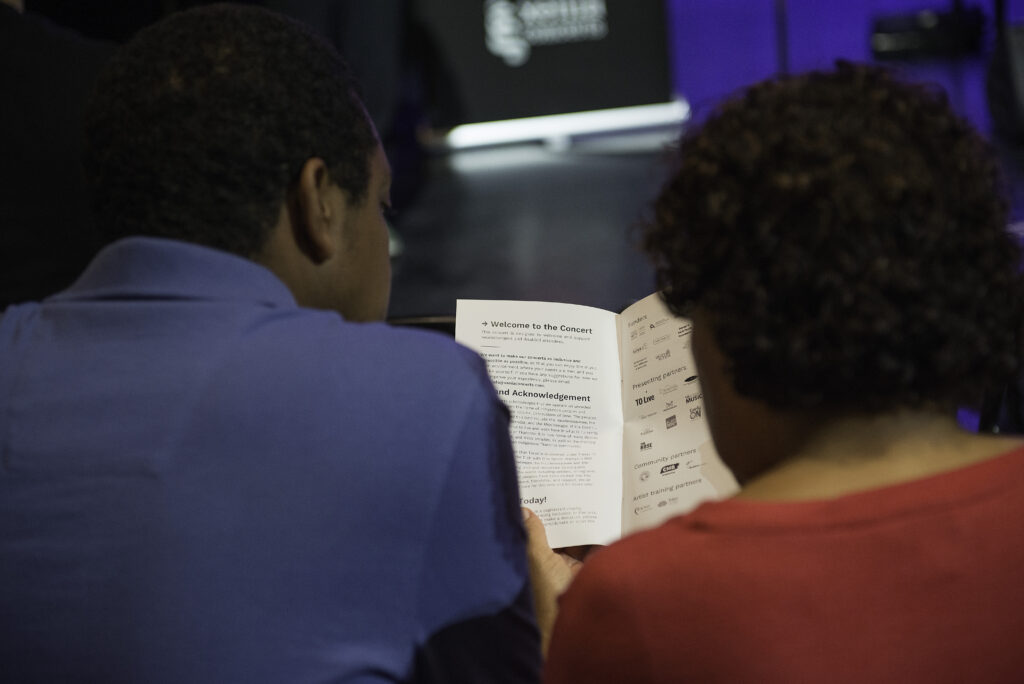
Photo Credit: Nichola Betts
Welcome back! This is the second blog article in our series introducing Adaptive Concerts. If you haven’t read the first article, you can follow this link to read it.
Why Adapt? Addressing Barriers to Inclusion
Think about the environment at a traditional sit-down concert. For many music-lovers, unintentional barriers make participation difficult, or even impossible. Here are just a few:
- Physical barriers: Is the venue accessible to people with mobility disabilities, wheelchair users, or those who live far from the event?
- Financial barriers: Can people afford tickets or the educational programs that foster appreciation of the art form?
- Sociocultural barriers: What unspoken rules—sit still, stay quiet, applaud on cue—might create pressure or exclusion?
- Communication barriers: Is essential information available in multiple formats or languages? Can people with sight, hearing, reading, or sensory processing differences access your website, programs, or event listings?
Expanding Our Imaginations
Accessibility begins with expanding our imagination, envisioning audience members who may not appear at concerts today, and rethinking what a performing arts experience can be.
The concept of Adaptive Concerts came about by asking a simple but transformative question: What if we designed concerts around audience needs instead of expecting audiences to conform to traditional norms? This approach reshaped every element of the event, from venue setup to programming to artist–audience communication. By putting people first, Xenia continues to introduce new accessibility features and experiment with innovative formats.
Imagine the impact if more organizations embraced this mindset: a world where diverse designs meet diverse needs, and everyone has both access to – and options for how to engage in – the arts.
Opening the Door to Inclusion and Belonging
When presenters prioritize their audiences, they create more inclusive and meaningful experiences that open the door to feelings of belonging. . This philosophy benefits not only accessibility-focused organizations but anyone seeking deeper audience engagement.
It’s important to remember that accessibility is dynamic work. There is no such thing as a “fully accessible” concert; different needs sometimes conflict. The goal isn’t to solve accessibility, but to adopt practices that continually expand inclusion and belonging.
Three guiding principles shape this work:
- Start with your audience’s needs and interests.
- Engage directly with the communities you want to reach.
- Iterate: keep learning, adjusting, and integrating new practices.
Challenging Ableism
Ableism–systemic discrimination and prejudice against disabled people–appears in structures, attitudes, and everyday interactions. It can be blatant, like denying access, or subtle, like assuming disabled people need “fixing” or treating them as inspirational simply for existing.
Challenging ableism requires more than adding a few accessibility features. It means reshaping the way we design experiences, recognizing that diversity in ability is not a flaw but a fundamental part of human life. Accessibility shouldn’t be an afterthought; it should be the starting point.